| You are here: | Home | Our Work | Leaders Program | Projects | 2008 Melbourne projects |
| Waleed Aly |
Australian Voices of Asia |
| Clive Callaway | Jetstar’s Engagement of the Local School Community on Cross-Cultural Awareness at a Jetstar Destination city |
| Bernie Clifford |
Access Asia – Cultural Icons and Events |
| Stefan Cross |
Understanding change management in a Japanese Organisation |
| Arthur Ha |
Feasibility Study of Accessing Offset Credits in Asia |
| Lisa Hayman |
The Australia India BRIDGE (Building Relationships through Intercultural Dialogue and Growing Engagement) project. |
| Dian Islamiati Fatwa |
Jakarta Climate Exchange (JCX) |
| Dr Marie Karamesinis |
Living Well with Turner’s Syndrome: A global story |
| Dr Andrew Kennedy |
Development of a pathway for elective placements for paediatricians from Cambodian, Laos or Vietnam at the Royal Children’s Hospital Melbourne |
| Alex Knigge |
Enhance the mutual cultural understanding among the staff that are involved in the cooperation and coordination of Commercial Services between Jetstar Airways located in Australia, Jetstar Pacific located in Vietnam and Jetstar Asia located in Singapore |
| Brett McDonald |
Communities in a Climate of Change |
| Magdalena Moreno |
CULTURENAV: Arts professional mentoring in Melbourne (pilot) |
| Roger Ouk |
Lets Chat |
| Iain Roy |
On-field diplomacy? Using cricket to strengthen the Australia-Indian relationship |
| Maha Sukkar |
Building Cross-Cultural Competence in Victoria Police Probational Constables |
| Neil Waters |
Engaging Chinese Australians as Blood Donors |
| Ben Waymire |
Pre-Departure Orientation - Managing transition issues for the inbound international student. |
| Stuart Whitman |
Feasibility Study for Delivery of Mental Health Education Program Vietnam |
| Carmel Williams |
Cultural dialogue for lateral hires to Melbourne Tax and Legal |
| Zhining Yang |
An Overarching Investment Attraction and Facilitation Action Plan for China Market |
| Juan-José Zentner |
Index for how to do business in China guides |
The principles of accessibility apply not only to people with mobility, hearing, vision or a sensory impairment they also encompass parents with prams, business people), large pedestrian flows, sporting teams with equipment, travelers and the issues relating to the growing aging populations of Asia and Australia. There are OHS benefits for workers, deliveries and general operations and emergency efficiency from an accessible environment
Cultural icons like the Great Wall of China and the Forbidden City have become ‘universally accessible’ to millions of people including those with disabilities for the first time in history. The ‘Accessibility’ of these cultural icons is created through both new policies and infrastructure and is a lasting legacy of the Beijing Olympics and Paralympic Games in 2008. Morris Goding Accessibility Consulting provided China with assistance to develop understandings of the benefits of providing access to these tourist features, especially as new tourist markets grow particularly as populations age.
From the recent experience with China and currently providing similar services to India, we have seen that there is a possibility for Accessibility Consulting to grow within Asia particularly in creating access to cultural Icons and events. Through the Asialink Leaders Program I have newfound understanding of the regions’ marketplaces and business cultures. I have produced an ‘Access Asia’ pilot program focusing on the Taj Mahal. From site visits and advice and discussions with key stakeholders I have developed an Access report and recommendations.
Further, I hope to apply the same methodologies within other Asian countries and develop the operational guidelines for their cultural attractions.
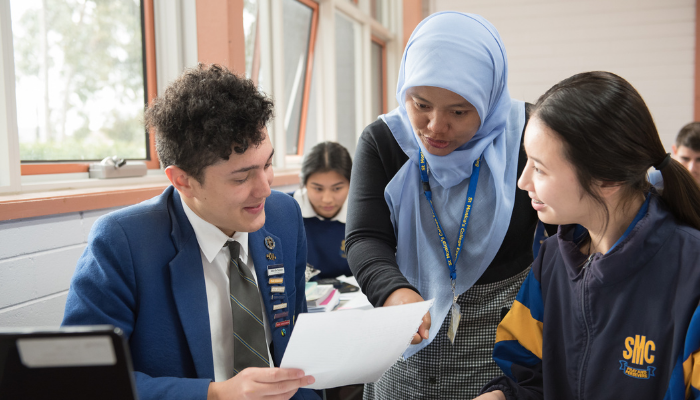
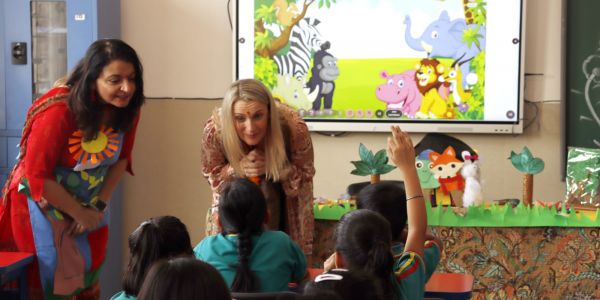
The aim of the BRIDGE project is to build the professional learning relationships between Australian and Indian teachers participating in the Australia – India Teacher Exchange Programme and to build collaboration between students in Australian and Indian classrooms through the use of web 2.0 technology.
To support this project a full day professional learning program for teachers from India and Victorian teachers was facilitated in May. This program provided the opportunity to explore the questions which Indian teachers had regarding education systems in Australia. Further to this teachers generated possible topic areas that would allow students to work collaboratively to develop greater cultural understanding.
Training in the use of wikispaces (a web 2.0 tool which enables easy creation of a webpage, uploading of files and includes functions such as online discussion) was also provided as a key element of this program to support student online communication and collaboration.
Teachers are now in the process of participating in online discussions, email contact and sharing of resources to support professional learning and classroom collaboration.
Created: 22 December 2008 3:15pm
Last Modified: 05 January 2009 9:44am
Authorised by: CEO, Asialink
Maintained by: asialink-webmaster@unimelb.edu.au